


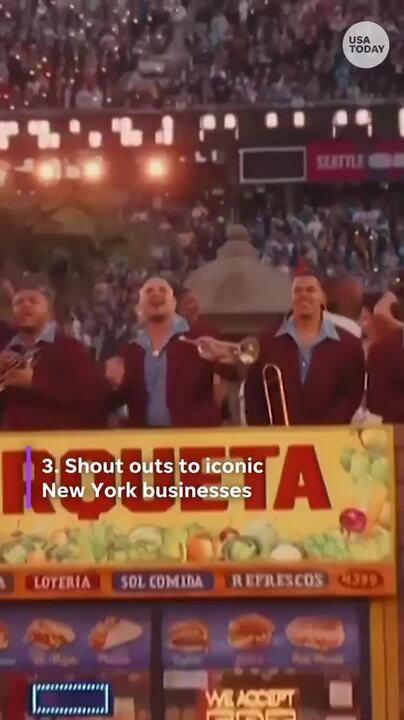
Victor Villa stood in the endzoneof Levi's Stadium on Feb. 8, Mexican flag in hand, overcome with emotion asBad Bunnysang"Baile Inolvidable."
No, no te puedo olvidar
No, no te puedo borrar
Tú me enseñaste a querer
Me enseñaste a bailar
Villa looked up, pointed his finger towards the sky and shouted: "Abuelo! This one's for you! Danny! This one's for you!"
It's been nearly two weeks since Villa, the owner of beloved Northeast Los Angeles taco stapleVilla's Tacos, participated in Bad Bunny'srecord-shattering halftime showat Super Bowl 60 in San Francisco. Toward the beginning of theGrammy-winning artist's performance, Bad Bunnywalked through a set modeled after sugarcane fields and was handed the Puerto Rican shaved ice treat known as a piragua. From there, he walked over to a silver taco cart with the name "Villa's Tacos" emblazoned in blue script and handed the piragua to Villa.
The whole interaction lasted less than five seconds, but it was enough to go viral.
El Super Bowl?How Bad Bunny is changing the face of Latin pop
Villa's Tacos gets Bad Bunny stamp of approval at Super Bowl 60
When Villa landed back in LA the next morning,he drove straight to one of his three locations, over at 5455 North Figueroa Street in Highland Park. Awaiting him was a crowd that took up the entire sidewalk and wrapped around the parking lot.
While no stranger to large crowds, this one has yet to subside. Many locals stopped by to get their regular fix of the Michelin Bib Gourmand-award-winning tacos served on their signature handmade blue corn tortillas. Many others in line waited eagerly for their first bite, some of whom had driven hours from places like Palm Springs and even Fresno.
"They've been non-stop," Villa told USA TODAY Sports. "They've been the most tiring 72 hours of my life, but they've been some of the best 72 hours of my life. Not only because we were seen on the highest platform ever, but because we were received with so much love.
"And that's ultimately the message that I got from Benito. Just this whole performance, and all the people that I met along the way, the cast that I spent three weeks with, day in and day out. It was just like, 'Love is the greatest force on Earth.'"
 Bad Bunny and Lady Gaga perform a salsa-inspired "Die with a Smile" during his Super Bowl halftime show Feb. 8 in Santa Clara, California." style="max-width:100%; height:auto; border-radius:6px; margin:10px 0;" loading="lazy" />
  Puerto Rican singer and actor Ricky Martin performed in front of monobloc chairs like the one on Bad Bunny's "DeBÍ TiRAR MáS FOToS" album cover, Martin sang a from "LO QUE LE PASÓ A HAWAii," a song that compares Hawaii and Puerto Rico's colonization." style="max-width:100%; height:auto; border-radius:6px; margin:10px 0;" loading="lazy" />
  Bad Bunny brought the iconic pink "Casita" to the Super Bowl halftime stage and invited some famous friends including Karol G, Cardi B and Jessica Alba." style="max-width:100%; height:auto; border-radius:6px; margin:10px 0;" loading="lazy" />
  Bad Bunny brought the iconic pink "Casita" to the Super Bowl halftime stage and invited some famous friends including Young Miko and Pedro Pascal." style="max-width:100%; height:auto; border-radius:6px; margin:10px 0;" loading="lazy" />
  Bad Bunny and Lady Gaga perform a salsa-inspired "Die with a Smile" during his Super Bowl halftime show Feb. 8 in Santa Clara, California." style="max-width:100%; height:auto; border-radius:6px; margin:10px 0;" loading="lazy" />
  Bad Bunny and Lady Gaga perform a salsa-inspired "Die with a Smile" during his Super Bowl halftime show Feb. 8 in Santa Clara, California." style="max-width:100%; height:auto; border-radius:6px; margin:10px 0;" loading="lazy" />
  Bad Bunny and Lady Gaga perform a salsa-inspired "Die with a Smile" during his Super Bowl halftime show Feb. 8 in Santa Clara, California." style="max-width:100%; height:auto; border-radius:6px; margin:10px 0;" loading="lazy" />
 Bad Bunny's vibrant halftime show was unforgettable. See it up close
Bad Bunny and Lady Gaga perform a salsa-inspired "Die with a Smile" during his Super Bowl halftime show Feb. 8 in Santa Clara, California.
Villa's Tacos owner 'learned a lot' from Bad Bunny
That love is evident in the way Villa carries himself. Everything he does, he does so with love. So when he heard Bad Bunny's message over the three weeks he spent rehearsing with the cast, it felt like hearing himself talk.
"I learned a lot from Bad Bunny's demeanor," he said. "Who he is, like more in depth. And it was nice to see that. It was nice to just see someone who would look at certain things the way I do."
He barely takes breaks. Instead, he cleans tables. He helps get orders out to customers. And he goes down the line one-by-one and introduces himself to every single person with handshakes, hugs and selfies.
Villa's Tacos is a true grassroots effort, started out of his grandma's house in 2018 before evolving into a pop-up, then a brick-and-mortar location, followed by two more. Eight years, a documentary, and an appearance on Netflix's "Taco Chronicles" later, Villa was in the Super Bowl — handpicked by the biggest artist in the world.
More:Bad Bunny makes history (again) with new career milestone
 Fresh off a historic win at the Grammys, Bad Bunny headlines the Apple Music Super Bowl LX Halftime Show Feb. 8, 2026. See the photos." style="max-width:100%; height:auto; border-radius:6px; margin:10px 0;" loading="lazy" /> Lady Gaga perform a salsa-inspired rendition of "Die with a Smile" at Bad Bunny's Super Bowl halftime show. " style="max-width:100%; height:auto; border-radius:6px; margin:10px 0;" loading="lazy" /> Ricky Martin performs "LO QUE LE PASÓ A HAWAii."" style="max-width:100%; height:auto; border-radius:6px; margin:10px 0;" loading="lazy" />
  Bad Bunny performs during the Apple Music Super Bowl LX Halftime Show at Levi's Stadium Feb. 8, 2026, in Santa Clara, California." style="max-width:100%; height:auto; border-radius:6px; margin:10px 0;" loading="lazy" />
  From left: Pedro Pascal, Karol G and Cardi B perform onstage during the Apple Music Super Bowl LX Halftime Show at Levi's Stadium on Feb. 8, 2026, in Santa Clara, California." style="max-width:100%; height:auto; border-radius:6px; margin:10px 0;" loading="lazy" />
  Bad Bunny performs alongside Jessica Alba, Alix Earle and David Grutman during the Super Bowl halftime show. " style="max-width:100%; height:auto; border-radius:6px; margin:10px 0;" loading="lazy" />
  Bad Bunny dances with a young girl onstage during "Baile Inolvidable." " style="max-width:100%; height:auto; border-radius:6px; margin:10px 0;" loading="lazy" />
  Bad Bunny holds his Grammy during Super Bowl halftime show. " style="max-width:100%; height:auto; border-radius:6px; margin:10px 0;" loading="lazy" />
  A real-life couple got married during Bad Bunny's halftime show performance at the Super Bowl. " style="max-width:100%; height:auto; border-radius:6px; margin:10px 0;" loading="lazy" /> Lady Gaga performs a salsa-inspired "Die with a Smile"" style="max-width:100%; height:auto; border-radius:6px; margin:10px 0;" loading="lazy" />
  Bad Bunny performs with power line props to signify the issues Puerto Rico went through during multiple hurricanes. " style="max-width:100%; height:auto; border-radius:6px; margin:10px 0;" loading="lazy" />
  Performers wave the flags of sovereign countries in the Americas at the conclusion of Puerto Rican singer Bad Bunny's performance during Super Bowl LX Patriots vs Seahawks Apple Music Halftime Show at Levi's Stadium in Santa Clara, California on Feb. 8, 2026. " style="max-width:100%; height:auto; border-radius:6px; margin:10px 0;" loading="lazy" />
  Bad Bunny holds the Puerto Rican flag." style="max-width:100%; height:auto; border-radius:6px; margin:10px 0;" loading="lazy" />
  A message is displayed while Puerto Rican singer Bad Bunny performs during the Super Bowl LX Patriots vs Seahawks Apple Music Halftime Show at Levi's Stadium in Santa Clara, California." style="max-width:100%; height:auto; border-radius:6px; margin:10px 0;" loading="lazy" />
  A couple marries during the Bad Bunny performance onstage at the Apple Music Super Bowl LX Halftime Show." style="max-width:100%; height:auto; border-radius:6px; margin:10px 0;" loading="lazy" />
  Bad Bunny with the trust fall at the Super Bowl halftime show. " style="max-width:100%; height:auto; border-radius:6px; margin:10px 0;" loading="lazy" />
  Bad Bunny" style="max-width:100%; height:auto; border-radius:6px; margin:10px 0;" loading="lazy" />
  Bad Bunny" style="max-width:100%; height:auto; border-radius:6px; margin:10px 0;" loading="lazy" />
  Bad Bunny" style="max-width:100%; height:auto; border-radius:6px; margin:10px 0;" loading="lazy" />
  Bad Bunny " style="max-width:100%; height:auto; border-radius:6px; margin:10px 0;" loading="lazy" />
  Bad Bunny" style="max-width:100%; height:auto; border-radius:6px; margin:10px 0;" loading="lazy" /> Bad Bunny and Lady Gaga" style="max-width:100%; height:auto; border-radius:6px; margin:10px 0;" loading="lazy" />
  Bad Bunny and Lady Gaga " style="max-width:100%; height:auto; border-radius:6px; margin:10px 0;" loading="lazy" />
  Bad Bunny" style="max-width:100%; height:auto; border-radius:6px; margin:10px 0;" loading="lazy" />
  Bad Bunny" style="max-width:100%; height:auto; border-radius:6px; margin:10px 0;" loading="lazy" />
  Bad Bunny" style="max-width:100%; height:auto; border-radius:6px; margin:10px 0;" loading="lazy" /> Bad Bunny and Lady Gaga" style="max-width:100%; height:auto; border-radius:6px; margin:10px 0;" loading="lazy" />
  Bad Bunny" style="max-width:100%; height:auto; border-radius:6px; margin:10px 0;" loading="lazy" />
  Bad Bunny" style="max-width:100%; height:auto; border-radius:6px; margin:10px 0;" loading="lazy" />
  Bad Bunny" style="max-width:100%; height:auto; border-radius:6px; margin:10px 0;" loading="lazy" />
  Bad Bunny" style="max-width:100%; height:auto; border-radius:6px; margin:10px 0;" loading="lazy" />
  Bad Bunny and Lady Gaga " style="max-width:100%; height:auto; border-radius:6px; margin:10px 0;" loading="lazy" />
  Bad Bunny " style="max-width:100%; height:auto; border-radius:6px; margin:10px 0;" loading="lazy" />
  Bad Bunny" style="max-width:100%; height:auto; border-radius:6px; margin:10px 0;" loading="lazy" />
  Bad Bunny" style="max-width:100%; height:auto; border-radius:6px; margin:10px 0;" loading="lazy" />
  Bad Bunny" style="max-width:100%; height:auto; border-radius:6px; margin:10px 0;" loading="lazy" />
  Bad Bunny" style="max-width:100%; height:auto; border-radius:6px; margin:10px 0;" loading="lazy" />
  Bad Bunny" style="max-width:100%; height:auto; border-radius:6px; margin:10px 0;" loading="lazy" />
  Ricky Martin" style="max-width:100%; height:auto; border-radius:6px; margin:10px 0;" loading="lazy" />
  Bad Bunny" style="max-width:100%; height:auto; border-radius:6px; margin:10px 0;" loading="lazy" />
  Bad Bunny" style="max-width:100%; height:auto; border-radius:6px; margin:10px 0;" loading="lazy" />
  Bad Bunny" style="max-width:100%; height:auto; border-radius:6px; margin:10px 0;" loading="lazy" />
  Lady Gaga performs with Bad Bunny" style="max-width:100%; height:auto; border-radius:6px; margin:10px 0;" loading="lazy" />
  Bad Bunny" style="max-width:100%; height:auto; border-radius:6px; margin:10px 0;" loading="lazy" />
  Bad Bunny" style="max-width:100%; height:auto; border-radius:6px; margin:10px 0;" loading="lazy" />
  Bad Bunny" style="max-width:100%; height:auto; border-radius:6px; margin:10px 0;" loading="lazy" />
  Bad Bunny" style="max-width:100%; height:auto; border-radius:6px; margin:10px 0;" loading="lazy" />
  Bad Bunny" style="max-width:100%; height:auto; border-radius:6px; margin:10px 0;" loading="lazy" />
  Bad Bunny" style="max-width:100%; height:auto; border-radius:6px; margin:10px 0;" loading="lazy" />
  Bad Bunny and Cardi B looking on. " style="max-width:100%; height:auto; border-radius:6px; margin:10px 0;" loading="lazy" />
  Bad Bunny" style="max-width:100%; height:auto; border-radius:6px; margin:10px 0;" loading="lazy" />
 Bad Bunny's vibrant halftime show was unforgettable. See it up close
Fresh off a historic win at the Grammys,Bad Bunnyheadlines the Apple Music Super Bowl LXHalftime ShowFeb. 8, 2026. See the photos.
"I don't live my life with any limitations," he said. "I think the sky's the limit, so I pray to reach the sky and that day came on Sunday. … I did think that I would be where I'm at today. I was always my biggest fan and I was always rooting for myself.
"So now that we're here, it's not necessarily a surprise, but it's a blessing."
From financial hardship to steadfast faith, Villa's Tacos rise
On Nov. 2, 2018, Villa fired up a grill he found on OfferUp in Long Beach and put some music on. The sounds of Vicente Fernández, Los Tigres Del Norte, cumbias and merengue filled the air on the block as he made tortillas and welcomed guests into his grandma's front yard on Avenue 50 and Lincoln Street.
It was a full family affair: his parents and grandparents, cousins, his then-girlfriend (now wife), his sister and all of his cousins − some of whom were small children at the time and now work at the Grand Central Market location − were present when Villa sold his first taco.
He was happy.
Before making tacos, Villa threw parties for a living. That first day of Villa's Tacos was one big function that he said lasts to this day.
More:Bad Bunny's Super Bowl halftime show brings powerful message, celebrities to world stage
But no party comes without at least one hangover.
Villa's goal from the very beginning was to make the best tacos he could, even if it wasn't the most profitable. Everything from the cuts of meat to the marinade, to the guacamole and the salsas, to the masa (a corn-based dough used to make tortillas) had to be top-tier. It was, as he calls it, "the Villa's way."
That uncompromising vision has paid off today, but eight years ago, it almost ruined him.
The gas tank in the Dodge Ram truck he bought specifically to make the trips back and forth from his grandma's house to the pop-up stand on York Boulevard more efficiently was empty. His refrigerator was empty. So was his bank account. His credit cards were maxed out.
"It was the toughest year of my life," he said. "Tough financially, tough staying in the battle when there was no more gas. …But we still needed to eat, and there was no way for us to eat."
A month behind on rent every month, Villa started to lose hope in himself. The people who had always supported him were now starting to question him.
"Maybe you should go back to your other job,"he remembers people telling him.
There was one person, however, whose faith was unwavering: his wife.
"She looked at me dead in my eyes," Villa recalls. "And she was like,'If anybody could do it, it's you. Keep on going, you got this.' And I was like, 'Wow, alright let's go.'"
Villa's Tacos: A Highland Park story
Villa's grandmother died in the years since he started making tacos, but that house on Avenue 50 and Lincoln is still in the family. And when he visits, Villa will sometimes just sit in the yard, thinking about where it all started.
"I'm definitely grateful for it all because of those times that brought me here," he said. "... It's just a reminder of where we came from. And not only where we came from — that house — but where we camefrom."
Advertisement
Villa's father, Victor Sr., immigrated to the United States from Jiquilpan, a small pueblo in the state of Michoacán near Sahuayo, with his brother when he was 18 years old. After eventually reuniting with his mother and the rest of his six siblings, who had stayed behind, they settled into an apartment in Echo Park. However, they lost everything in a fire.
"We had to start all over again," Victor Sr. said in the documentary film, "Échale Ganas." "But we were safe, and we were together as a family."
With aid from the American Red Cross, the Villa family moved into their new home, where they've now been for 45 years.
One of the oldest neighborhoods in Los Angeles, Highland Park has historically been a heavily Latino working-class community. That's been changing in recent years.
 Bad Bunny accepts the album of the year award for "DeBÍ TiRAR MáS FOToS" onstage during the 68th Grammy Awards on Feb. 1, 2026, in Los Angeles" style="max-width:100%; height:auto; border-radius:6px; margin:10px 0;" loading="lazy" />
  Bad Bunny poses with the album of the year, best música urbana album and best global music performance awards during the 68th Grammy Awards." style="max-width:100%; height:auto; border-radius:6px; margin:10px 0;" loading="lazy" />


 Puerto Rican singer Bad Bunny performs onstage during the first show of his 30-date (which ended up being 31 in total) concert residency at the Coliseo de Puerto Rico in San Juan, Puerto Rico, on July 11, 2025. " style="max-width:100%; height:auto; border-radius:6px; margin:10px 0;" loading="lazy" />
  Bad Bunny thanked his fans for "letting me sing in my home in front of my friends, my family and my people" on what was the final night of his residency in September 2025. "Thank you for that," he said. "I love you, thank you for being a part of this."" style="max-width:100%; height:auto; border-radius:6px; margin:10px 0;" loading="lazy" />
  On top of his Puerto Rico residency, Bad Bunny was also juggling life as a Hollywood actor attending the premiere of "Caught Stealing" on Aug. 26, 2025, in New York City. " style="max-width:100%; height:auto; border-radius:6px; margin:10px 0;" loading="lazy" />
  Bad Bunny starred alongside Austin Butler in the movie. " style="max-width:100%; height:auto; border-radius:6px; margin:10px 0;" loading="lazy" />
  Earlier in summer 2025, Bad Bunny was spotted at Netflix's "Happy Gilmore 2" premiere on July 21, 2025, in New York City, which he starred alongside Adam Sandler." style="max-width:100%; height:auto; border-radius:6px; margin:10px 0;" loading="lazy" />
  Bad Bunny at the 2025 Met Gala Celebrating "Superfine: Tailoring Black Style" at Metropolitan Museum of Art on May 5, 2025. Bad Bunny gave a playful Puerto Rican twist to the Black dandy theme with a crisp espresso brown suit. He paired the custom-made Prada ensemble with a brimmed hat resembling a pava, a traditional straw hat made from leaves of the Puerto Rican hat palm." style="max-width:100%; height:auto; border-radius:6px; margin:10px 0;" loading="lazy" />
  Bad Bunny onstage at the 2025 iHeartRadio Music Awards at Dolby Theatre in Los Angeles on March 17, 2025. " style="max-width:100%; height:auto; border-radius:6px; margin:10px 0;" loading="lazy" />
  Bad Bunny onstage at the 2025 iHeartRadio Music Awards at Dolby Theatre in Los Angeles on March 17, 2025. " style="max-width:100%; height:auto; border-radius:6px; margin:10px 0;" loading="lazy" />
  Bad Bunny onstage at the 2025 iHeartRadio Music Awards at Dolby Theatre in Los Angeles on March 17, 2025. " style="max-width:100%; height:auto; border-radius:6px; margin:10px 0;" loading="lazy" />
  In February 2025, Bad Bunny attended "SNL50: The Anniversary Special" in New York City. " style="max-width:100%; height:auto; border-radius:6px; margin:10px 0;" loading="lazy" />
  Bad Bunny performs during his Most Wanted Tour at the Kaseya Center in Miami on May 24, 2024. " style="max-width:100%; height:auto; border-radius:6px; margin:10px 0;" loading="lazy" />
  Bad Bunny attends the Dior Homme Menswear spring/summer 2025 show as part of Paris Fashion Week on June 21, 2024. " style="max-width:100%; height:auto; border-radius:6px; margin:10px 0;" loading="lazy" />
  Bad Bunny performs at the Crypto.com Arena during his Most Wanted tour in Los Angeles, March 13, 2024." style="max-width:100%; height:auto; border-radius:6px; margin:10px 0;" loading="lazy" />


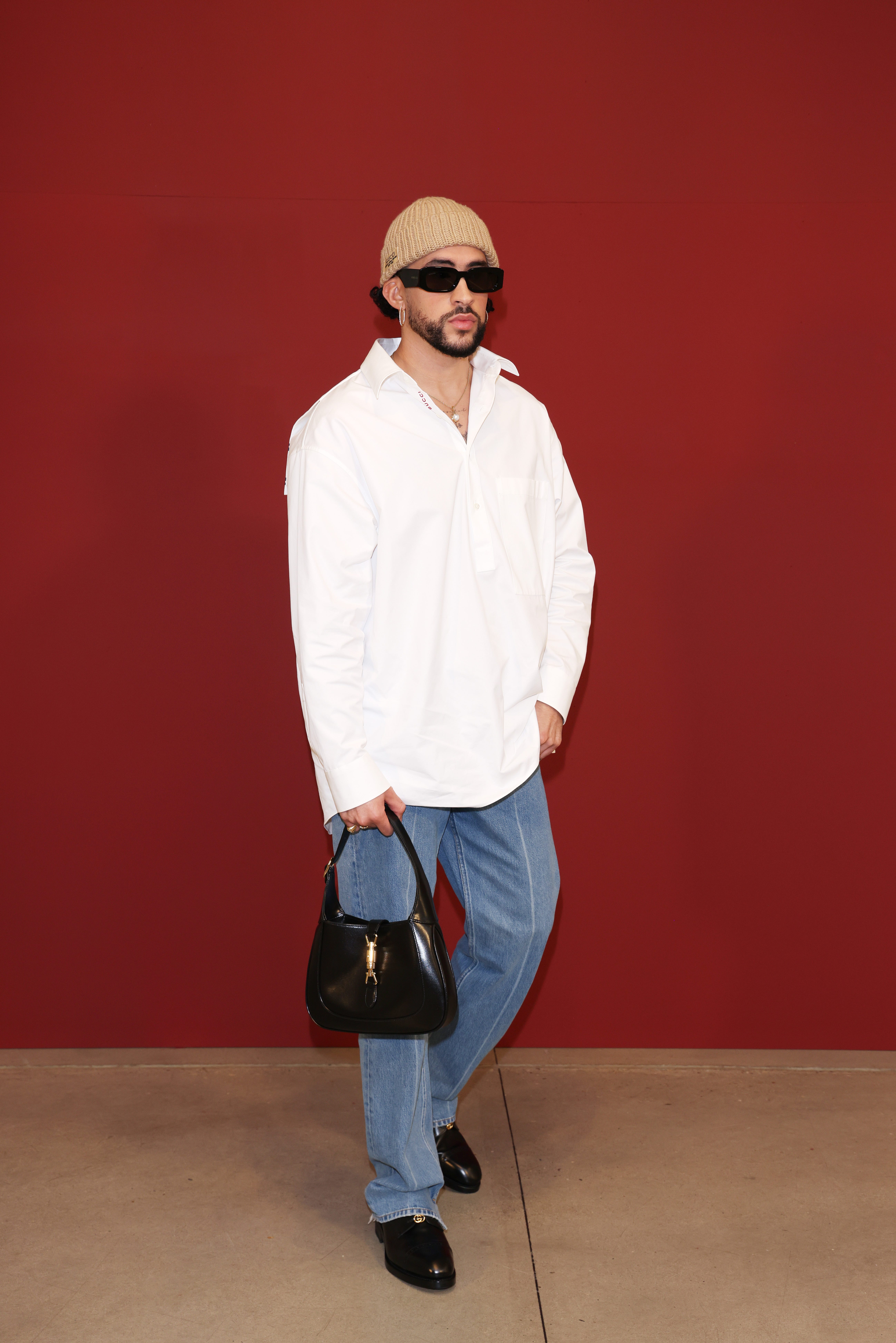


 Cardi B, Chencho Corleone, Ivy Queen and reggaeton duo Jowell y Randy." style="max-width:100%; height:auto; border-radius:6px; margin:10px 0;" loading="lazy" />


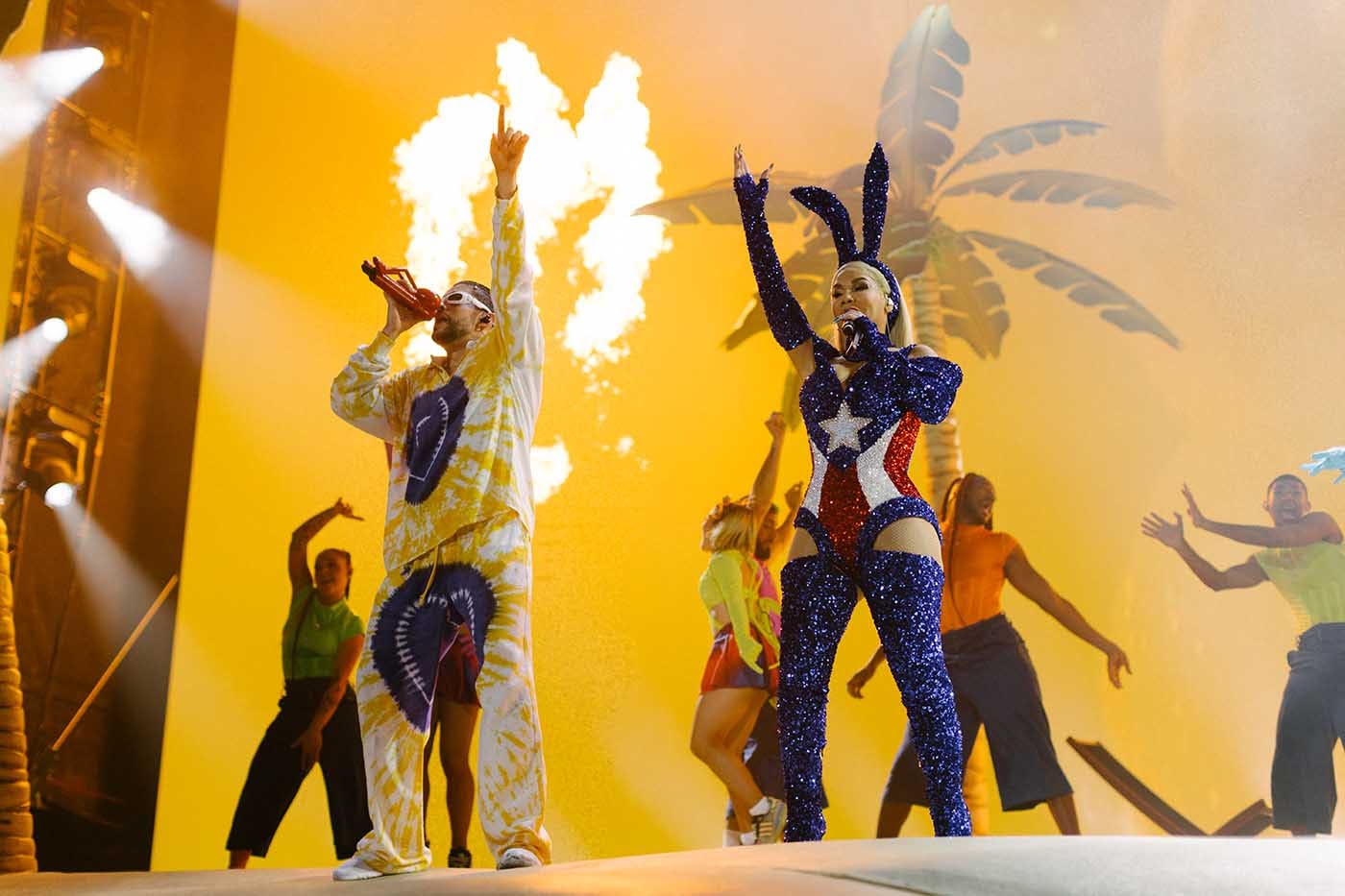
 declaring Oct. 1 as the official Bad Bunny Day. " style="max-width:100%; height:auto; border-radius:6px; margin:10px 0;" loading="lazy" />


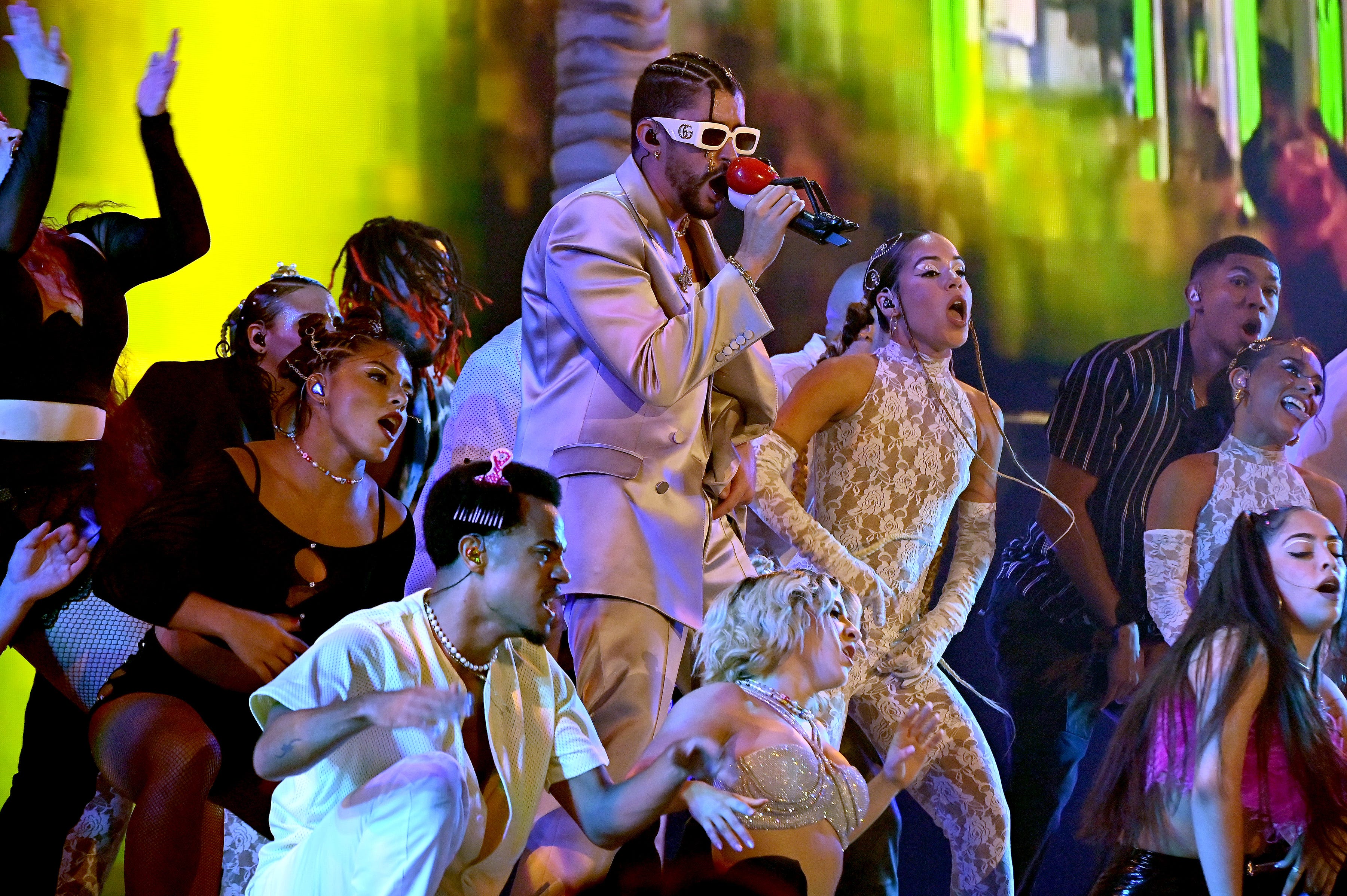


 two new wax figures at Orlando and New York's Madame Tussauds on April 19, 2022. The figure at Madame Tussauds New York is wearing the iconic all-silver look from the Grammy-winner's 2020 Super Bowl performance alongside Jennifer Lopez, Shakira, and J Balvin, complete with the same silver jacket he wore. The wax figure in Orlando is wearing an outfit originally from his WWE Royal Rumble performance and is featured in his "Booker T" music video. For the figure, Bad Bunny donated his trenchcoat, vest, trousers, and pants. " style="max-width:100%; height:auto; border-radius:6px; margin:10px 0;" loading="lazy" />
  Bad Bunny is set to portray the title role in "El Muerto," making history as Marvel's first Latino lead in a live-action film. He calls the film the "perfect role" for him.
Before suiting up as the super-powered wrestler, the Puerto Rican rapper will make his big-screen acting debut in the neon-drenched "Bullet Train" (in theaters July 29), doing battle with Brad Pitt. " style="max-width:100%; height:auto; border-radius:6px; margin:10px 0;" loading="lazy" />
 April 2021 at WWE's WrestleMania 37. In this photo, taken Jan. 29, 2022, Bad Bunny jumped into the ring again during the Royal Rumble match at The Dome at America's Center. " style="max-width:100%; height:auto; border-radius:6px; margin:10px 0;" loading="lazy" />


 22nd Latin Grammy Awards. That night he took home the award for best rap/hip hop song for "Booker T" and best urban music album for "El Último Tour del Mundo." " style="max-width:100%; height:auto; border-radius:6px; margin:10px 0;" loading="lazy" />


Bad Bunny makes history at the Super Bowl. The Puerto Rican star's career in photos.
Bad Bunny accepts the album of the year award for "DeBÍ TiRAR MáS FOToS" onstage during the 68th Grammy Awards on Feb. 1, 2026, in Los Angeles
On the corner of North Figueroa Street and North Avenue 61 − directly across the street from what used to be a longstanding local favorite, Tacos La Estrella, and is now Villa's Tacos' third location − stands"Tenochtitlan," a 75-foot-long muralpainted in 1996 that features the work of 10 different artists.
Anthony Reyes would often pass by the mural as a child. The bold colors and the imagery − from indigenous symbols such as the Aztec calendar, pyramids, deity Quetzalcoatl and Olmec colossal heads to depictions of the Virgin Mary, Emiliano Zapata, Cesar Chavez and migrant fieldworkers − captivated him.
"And the stories," Reyes said. "The stories that these murals tell, bro. Because a lot of the time, these walls can talk."
While "Tenochtitlan" still stands after 30 years, many other landmark murals have disappeared. So too, have many other parts of Highland Park that were once part of the fabric of the community.
"Slowly but surely, it's been happening and as you can see, it took over now," Reyes said. "You drive down Figueroa, you don't even notice it no more compared to how it was when we grew up here."
Most of the mom-and-pop stores that once lined both Figueroa Street and York Boulevard are gone. Replaced by bars and coffee shops.
Villa himself noticed it when his favorite video store, a hole-in-the-wall on Avenue 51 and York that he and his family frequented and rented movies from every Sunday, was gone.
"And then before you know it," Villa said. "Highland Park wasn't even recognizable."
Every Christmas growing up, Villa's family would do posadas with all the neighbors. But one by one, each of them left until one year Villa realized there was no one left to have a posada with.
Vinny Sigala saw the neighborhood start to change throughout his years in middle school and high school. He says he was lucky because his family owned their home, but many of his peers were hit much harder.
"The low-income housing in the neighborhood got washed," Sigala told USA TODAY Sports. "They built new apartments, changed the rules, the facilities, everything. They even [raised] the rent ... so it was really hard for my peers to stay, and they lost their place."
"It just sucks," Reyes added. "Because people, at the end of the day, can't really afford to live here no more."
There is some nuance, however.
Figueroa Street, once dimly lit only by old-fashioned streetlamps, is safer than it used to be. Sigala realized he needed to adapt. Whether it was working with his cousin's moving company or detailing cars, there's always multiple hustles going on.

One of the ways Sigala capitalized was by running Northeast Streetdogs, a food cart where he sells hot dogs to local bar patrons on weekends. Among his regular clients is Villa, someone he's inspired by.
"He was always the vendor that I looked up to," Sigala said. "... He had the blue tortillas nobody ever had. He had the cheese tortillas nobody ever had. … It's different. I'd never seen his type of work.
"... He's a northeast legend to the fullest."
Reyes also mentioned the need to adapt. But even still, he can't help but feel the social displacement sometimes.
"[Gentrification] makes us locals feel like strangers in our own community," he said. "... They make us feel out of place, like 'What are you doing here?' Well, we've been here."
So when Villa appeared for a few seconds on a TV screen seen by 128.8 million people, it hit especially home for a section of Angelenos who have been feeling less and less at home.
"This win doesn't only belong to me, but it belongs to all of us so it should be shared by all of us," Villa said. "By you, by the reporter who came before you, the reporter who's coming after you. I'm taking this time to really show my appreciation and share this win with the community."
Villa's Tacos community cheers them on: 'That's my boy, man'
And it was a win that the community was in dire need of.
Reyes beamed with pride. "That's my boy, man. I grew up with him. I seen him come up. It was just a great moment to witness. … It's something that this community needs, especially us being brown. We need people to look up to, especially Vic, being from here, starting from nothing and becoming what he is now."
Over the years, Villa has followed the mantra of "Villa's Tacos are for everybody." His customers come from all walks of life, from all backgrounds, of all races. Together.
 Bad Bunny sat with Apple Music hosts Zane Lowe and Ebro Darden at Feb. 5's Super Bowl LX Halftime Show press conference.
The global superstar shared insight into the cultural moment and creative vision behind one of the most anticipated and debated halftime performances in NFL history.


Bad Bunny discusses halftime show vision ahead of Super Bowl
Bad Bunny sat with Apple Music hosts Zane Lowe and Ebro Darden at Feb. 5's Super Bowl LX Halftime Show press conference.
The global superstar shared insight into the cultural moment and creative vision behind one of the most anticipated and debated halftime performances in NFL history.
"I think that's how we should just live our lives," Villa said. "We shouldn't always look at the color of someone's skin and judge them off it. Or the color of their eyes. We're all the same person, just we look a little different. Villa's Tacos, it's a safe space for everybody. Regardless of your background, regardless of anything really.
"Our main thing is just to spread love."
Kind of like him and his castmates at the Super Bowl.
"Bad Bunny chose the perfect person to be on the show," Sigala said. "And to show how authentic and how much pride we have in our community and our sales and our food, you know, because we put pride into this. This is our lifestyle."
Bad Bunny ended his setlist with the song "Debí Tirar Más Fotos." Right before, cast members each carried flags from all over both American continents as Benito listed every single country. He flashed a football towards the screen that read "Together, We Are America."
Villa thought of his late grandfather and cousin at that moment. But the tricolor flag on his shoulder made it so much bigger.
"God gave me another opportunity at life for moments like that," Villa said. "God gave me the blessing of this restaurant so that I could share that field, and God gave me this heart that I have to share with my family. It's a reminder that love isn't only around when that person is around. Love is forever. It was a reminder of the love that I have in my heart and the love that people have for me in theirs.
"And the love that I have for the Mexican flag, for coming from Mexico, for being a product of immigrants and just all that. It was just a reminder of who I am and what I stand for."
This article originally appeared on USA TODAY:Bad Bunny Super Bowl show featured Villa's Tacos — Follow their journey


